
Textil Insulation Membrane It provides waterproofing by being laid under coating materials such as ceramics, tiles, etc., on all wet surfaces. The application is extremely easy and economical. Depending on the condition of the surface to be applied, different insulation materials are preferred. Insulation techniques vary depending on factors such as the surface being uneven or having cracks. Some of the insulation materials used for waterproofing are listed below.
- Polypropylene and Polyethylene insulation materials (Textile Insulation Membrane)
- Cement-based insulation material
- Acrylic liquid insulation material
- Bituminous membrane insulation material
- Epoxy floor coatings
- Spray / Foam insulation materials
Polypropylene (PP) and Polyethylene (PE) Insulation Membrane
In general, textile insulation membranes have a three-layer sandwich structure. The Polypropylene (PP) felt is used on the inner and outer surfaces, with a layer of Polyethylene (PE) in between.
Polypropylene (PP): Polypropylene (PP) is a widely used material in various industries. It has high resistance to chemicals, provides electrical insulation, and is safe for contact with food. These properties allow for its use in the production of many everyday products. For example, PP is used in the production of electrical materials, plastic kitchenware, and electrical cables.
Polietilen (PE): Polyethylene is abbreviated as PE. Known as an engineering plastic, PE shares similar properties with PP. With its low wear and high strength properties, PE is used in the automotive industry and other sectors for the production of moving parts.
Textile insulation membrane is highly suitable for waterproofing on smooth surfaces. It is particularly preferred for pool walls and floors due to its resistance to chemicals. Textile Insulation Membrane – Maxiblue® It is specifically designed for use on all wet surfaces.
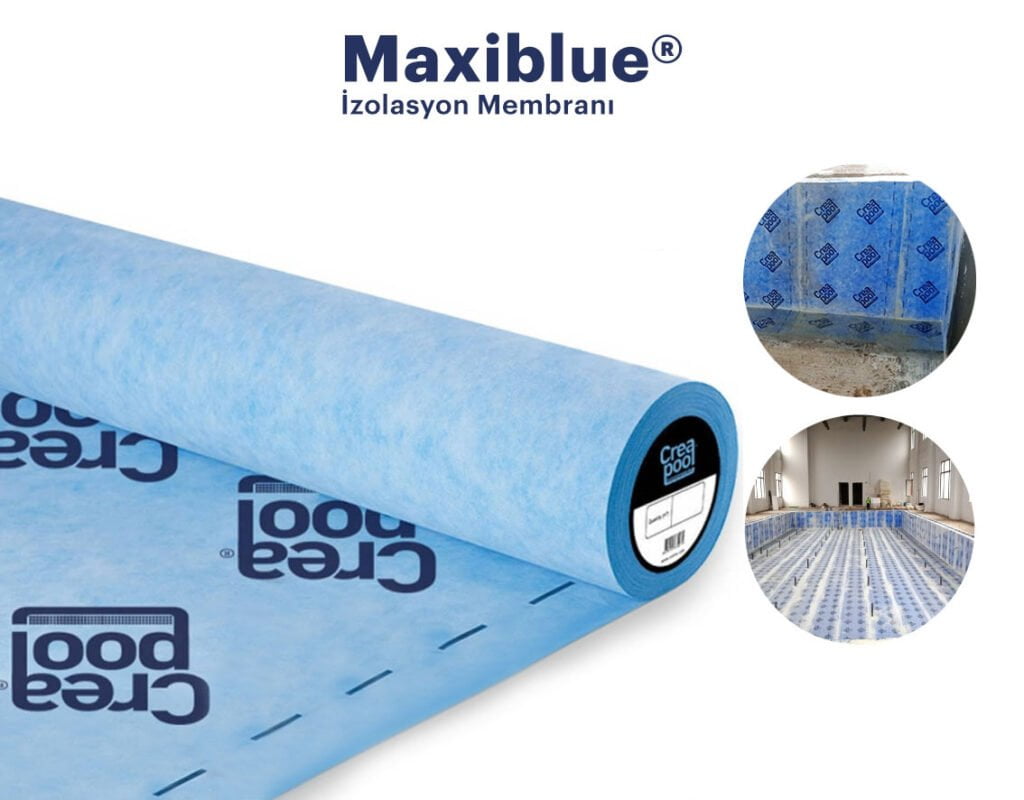
Maxiblue® Usage Areas
Creapool Maxiblue® is designed to solve waterproofing problems in all wet surfaces. Manufactured using advanced technology, Maxiblue® offers an economical, easy-to-apply, and long-lasting solution. It serves as a waterproofing layer in areas where water leakage problems are commonly encountered. The main application areas are as follows:
Swimming Pools: It provides insulation for the walls and floors of swimming pools of all sizes. Additionally, its application is extremely easy and comes with a 10-year warranty.
Terrace, Balcony: It can be used for waterproofing under coverings such as marble, tiles, and ceramics on surfaces like terraces, balconies, etc.
Shower Channels: It provides waterproofing in areas such as shower channels and water drains.
Water Tanks: It provides waterproofing for water tanks.
Underfloor Heating Systems: It acts as a moisture barrier when laid under floor heating systems. It prevents warping of floor coverings like parquet and laminate, ensuring long-lasting durability.
Creapool Maxiblue® General Features
Creapool Maxiblue® meets the relevant standards in tests such as tensile strength (EN 12311-1), tear resistance (EN 12310-1), water penetration resistance (EN 1928), elongation (EN 12311-1), and fire resistance (EN 11925-2). For detailed technical specifications, please refer to... Creapool Tekstil İzolasyon Membranı sayfasını ziyaret edebilirsiniz.
How to Apply Creapool Textile Insulation Membrane?
Creapool Maxiblue®Since Creapool Maxiblue® has low resistance to UV rays, it should not be used as a final layer in areas such as terraces. When exposed to direct sunlight, it undergoes structural damage. To protect the textile insulation membrane from sunlight, it should be covered with ceramic, tile, marble, etc. The application is very simple and practical.
First, a C2TeS1 class ceramic adhesive mortar is spread over the surface to be applied using a trowel. Then, a piece of membrane is cut to the length of the area to be waterproofed and adhered to the plaster, then smoothed. In the third step, a layer of C2TeS1 class ceramic adhesive mortar is applied on top of the membrane. Finally, the covering material is placed.
Textile Insulation Membrane Prices
Textile insulation membrane prices vary depending on parameters such as production technology, standards, and the roll size used.
To get Maxiblue® insulation membrane, which offers long-lasting and efficient solutions, at advantageous prices, contact us now. iletişime You can get information about professional solutions from our experienced and expert consultants.
Related Topics: